BY ALAYSHA MAPLE alaysha@theitem.com
Southern life in October 1925 was marked with stark contrasts.
While parts of the country embraced the prosperous “Roaring Twenties” for its liberal lifestyle and the blue notes that flowed throughout its jazzy soundtrack, the South remained largely segregated under Jim Crow laws, conservative in its beliefs and procedures and economically disadvantaged following the drop in cotton prices, stagnant wages and The Great Migration to northern and midwestern cities.
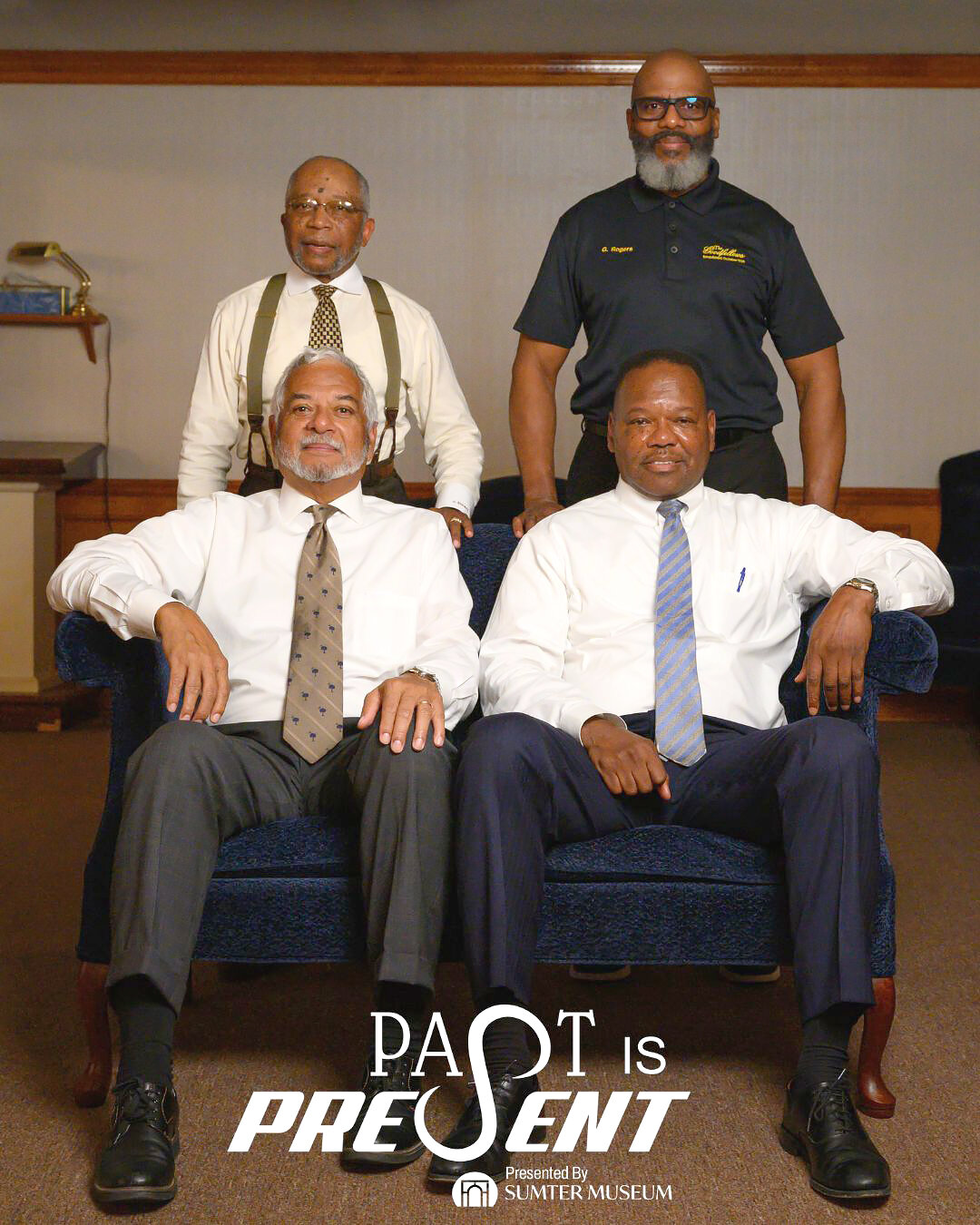
But as the common saying goes, “Every cloud has a silver lining.” And for Sumter, its silver lining lies in the gold embroidery on Greg Rogers’ polo: The Goodfellows Club.
In October, 100 years ago this year, a group of men – former City Councilman Willie Singleton Jr., the Rev. Ralph Canty, former Rep. Larry Blanding, Calvin “LC” Frederick, Steven Bradford, the late South Carolina Supreme Court Chief Justice Ernest Finney, to name a few – who held reputable positions throughout the Sumter community, came together with the intention to create connections that would keep them abreast of issues in the community. Initially, the meetings of the minds were held in their homes, places where the conversations were not politically correct but were powerful and compelling. The club’s policies, principles and bylaws were born among their homes, alongside their family heirlooms, before growing out into the community. These humble beginnings only solidify the creed’s sacredness.
“They individually strived to exhibit good behavior. As individuals, [they believed] it was our responsibility to help the less fortunate, that all people had intrinsic worth – these are the things that are the foundation of the club,” said Goodfellows President Greg Rogers.
His 12 years as a member of the Goodfellows is preceded by a lifetime of witnessing the men of this club be instrumental in the community through their financial and moral support of YWCA of the Upper Lowlands, NAACAP, Boys and Girls Club, among others, and their mentorship, their awarding of scholarship to further one’s personal and professional endeavors, and their willingness to hold conversation that changed the lives of many young people. He was “enthused” by such actions and he, too, wanted to aid in their continuation.
It was how he came to meet past Presidents Dwight Moore and Ernest “Chip” Finney, who now serves as club secretary. This duo shares a 40-year membership in the club, and a catalog of the lessons afforded to them by elder members of the club.
Entry to the club is by invitation and only upon acceptance by the club membership. While these men grew up in the shadows of the spotlight of the late Chief Justice Finney – Chip as his son and Moore as the friend – they would come shoulder to shoulder with educators, law enforcement officers and attorneys who were never propelled into the spotlight and didn’t need to be in order to have influence.
“Seeing positive role models in the community was very important for the men that are sitting here today because we’ve all stayed in Sumter – that’s No. 1,” Chip Finney expressed. “A lot of people didn’t, and we saw the progress that our mentors had made in business, in the community with politics opening up and government jobs opening. There have always been leaders in our community, and this group, the Goodfellows, allowed us to come together, share information and support one another. That kind of thing was not widespread back in the ’40s, the ’50s and the ’60s.”
“When this club was initially formed in the 1920s, the times were far different than they are now. We’ve traveled for 100 years, and you can imagine the things that this community, this state, these United States transitioned from, and this club through its membership had a large voice in that transition and making it better for the minority community and the community at large,” Moore explained. “Realizing how far these gentlemen have helped this community and the awesome part about this – why I talk about the pressure – is we have to somehow continue that.”
Pressure builds diamonds, as seen by the men who came before them. The ones who became the first of many in their field or the best at one skill. The ones who showed what it meant to be strong or how you could say less and still hold power. The ones whose advice lacked polish but made up for it in impact. If they didn’t carry the titles, the respect, the viability upon their entry to the club, then it is engrained in the legacy left behind.
The obstacles of yesteryear differ from those of today, more so in their presentation but remaining deep-seated in their origins. It is because of that club members hold firm to the tenacity its founders and elders instilled in them. A century of existence with the same level of activity, understanding, passion and purpose is no small feat, and the group does not take the responsibility to keep it alive for centuries to come lightly.
“Was there ever any thought that was too much or too big or unobtainable? I don’t think that ever occurred to us. We saw too much,” said James Elbert Williams, club vice president and five-year member of the club. “We were always encouraged through the Goodfellows that everything was accomplishable if you set your mind to it. Whether you were a carpenter, whether you were a mortician, if you were a lawyer, a school teacher; everything was obtainable.”
“That’s the positive side of this group: We don’t back down. We don’t say that we can’t do it or that’s out of our range.”
Which is why a statue of the late Chief Justice Finney Jr. will sit prominently at Sumter County Judicial Center on Harvin Street in his birthday month, March 2026 – the biggest project the club has ever undertaken. The estimated $150,000 project, taken on by an artist in Camden, nears completion as its crafted clay frame of Finney is bronzed in Florida. As the statue will rest in Sumter, a portrait of the late chief justice will hang in the halls of University of South Carolina Joseph F. Law School.
Finney Jr. made history as the first Black Supreme Court chief justice for South Carolina. Before that, he was a decorated defense attorney who fought for civil rights, including his defense of the Friendship Nine, a group of Black students from Friendship Junior College in Rock Hill, North Carolina, that staged a sit-in at a segregated lunch counter in 1961. Like many of the men who defied the odds before them, to witness the legacy of Finney Jr. in real time was an experience unlike any other for Chip Finney, Moore and many others. Which is why preserving history in this statue was not a want, but also a need.
“When you look at the history of the community, when you look at the individuals that brought major change, that opened doors for so many others no matter what career were you in; we had portraits and we had literature, but we needed something that the community could envision and see, and it needed to be in the right place,” Rogers explained.
“If you don’t preserve it, it’s going to get lost. If you don’t teach it, somebody will never know. If it’s not present, you can’t see it,” Williams added. “That’s an extreme part of the history of Sumter County and of the multitude of lives that he touched all over the state and the nation. Those things are extremely important so that we may be able to reach some of those young folks that are behind us and maybe some adults as well. To know what has happened so that you could have gotten to where you are and who’s responsible for you getting to that level of achievement.”
A century seems long removed in words, but it couldn’t feel closer to home when you’re looking in the faces of those who can recall it from memory. Who can paint vivid pictures of the figures who laid metaphorical bricks at their feet so that they may walk a path that is not easier, but more obtainable. To walk in the memories they tell, echo the laughter they share and heed the wise words once told to them.